
Start with the organization that can still stop harm
Reporting is not one single action. Different organizations can do different things.
If money moved, contact the bank, card issuer, transfer service, e-wallet, payment app or cryptocurrency platform immediately. If an online account or listing is involved, report it through the affected platform as well.
These first reports may be more time-sensitive than a police or regulatory report because the provider may still be able to freeze an account, flag a recipient, preserve records or start a dispute process.
Then identify the correct official authority
The right public authority depends on where you live, where the scammer or service operates, what type of scam occurred and which regulated activity is involved.
Possible channels include:
- local or national police;
- a national cybercrime reporting service;
- a consumer-protection agency;
- a financial, securities, telecom or privacy regulator;
- a national anti-scam centre;
- a specialized identity-theft or online-abuse service.
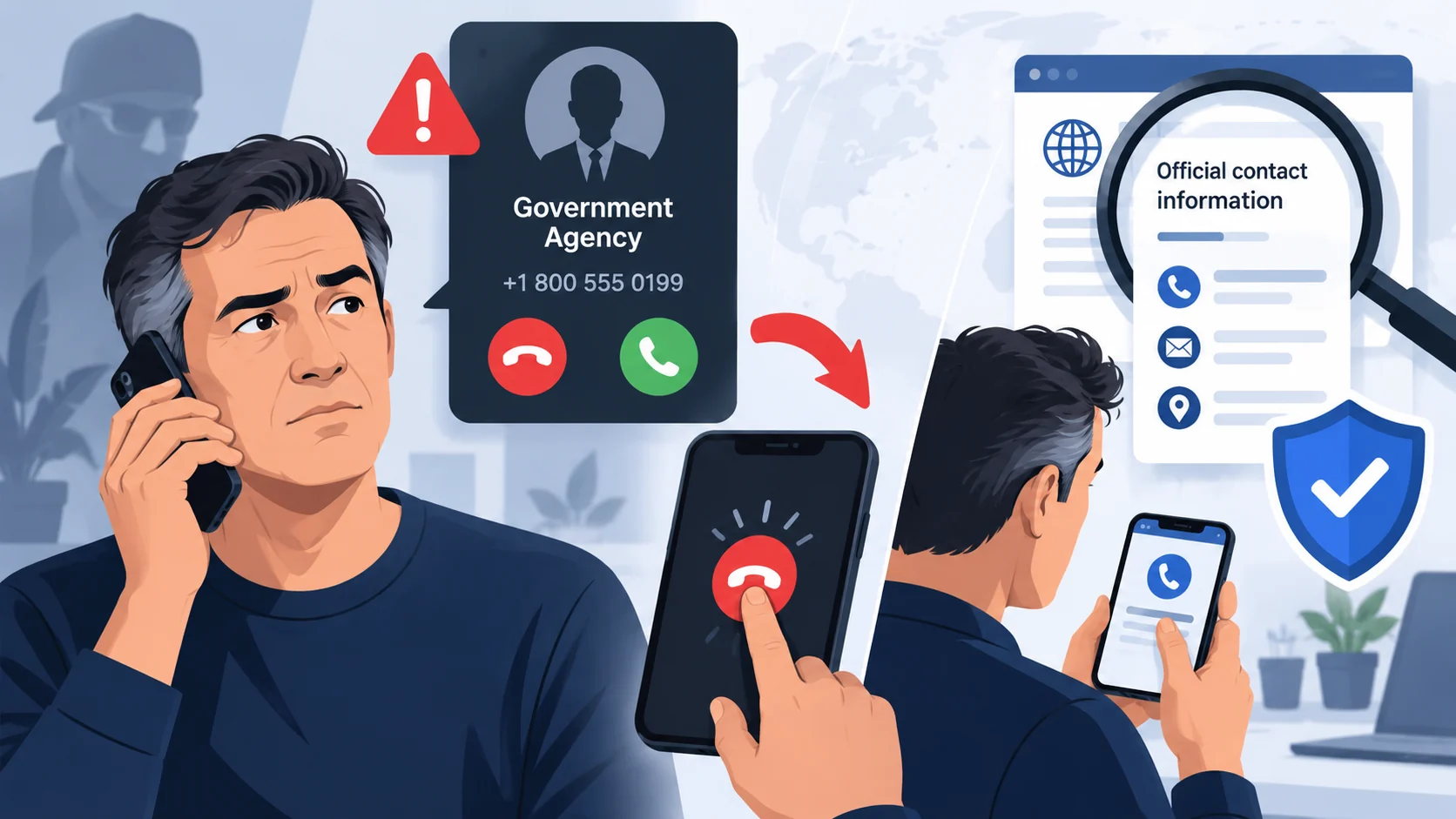
Use the authority’s official website rather than a phone number, form or “agent” supplied by someone who contacted you about the scam.
If you are in Europe
Europol maintains a country-by-country page linking to national cybercrime reporting channels for participating European countries. Europol itself is not a replacement for your national police reporting process.
If the scam crossed borders
For international consumer scams and cross-border fraud, econsumer.gov is supported by consumer-protection agencies from more than 65 countries and is available in multiple languages. It does not replace urgent contact with your bank or local police when immediate action is needed.
If the incident involves a website or domain, the ScamMark Website & Domain Risk Checker can help you note the current domain, redirect destination and other public technical details before reporting. Official authorities and providers will decide what evidence they require.
For verified country-specific starting points in the United States, Canada and Australia, and for the distinction between FTC/ICPEN econsumer.gov and FBI IC3, see how to report a cross-border scam. If you want to read fraud statistics rather than file a report, visit the official country-trends reference.
Keep the report useful
Have a short timeline and the most important identifiers ready:
- dates and times;
- amount and payment method;
- transaction or reference numbers;
- account, profile, phone and email identifiers;
- exact website and profile URLs;
- screenshots and original messages;
- names of providers already contacted and their case numbers.
Do not send passwords, one-time codes or seed phrases as “evidence.”
Sources and references
These sources support the factual guidance and analysis on this page. For reporting, legal, financial or provider-specific procedures, follow the linked organization’s current instructions.
- Business Email Compromise Fraud — what to do after paymentINTERPOL
- Report Cybercrime onlineEuropol
- Report International Scams at econsumer.govU.S. Federal Trade Commission / International Consumer Protection and Enforcement Network