
Reporting
How and where to report a scam
Find the organization that can act on a scam report, then use the correct official channel for your country, provider, platform and type of incident.
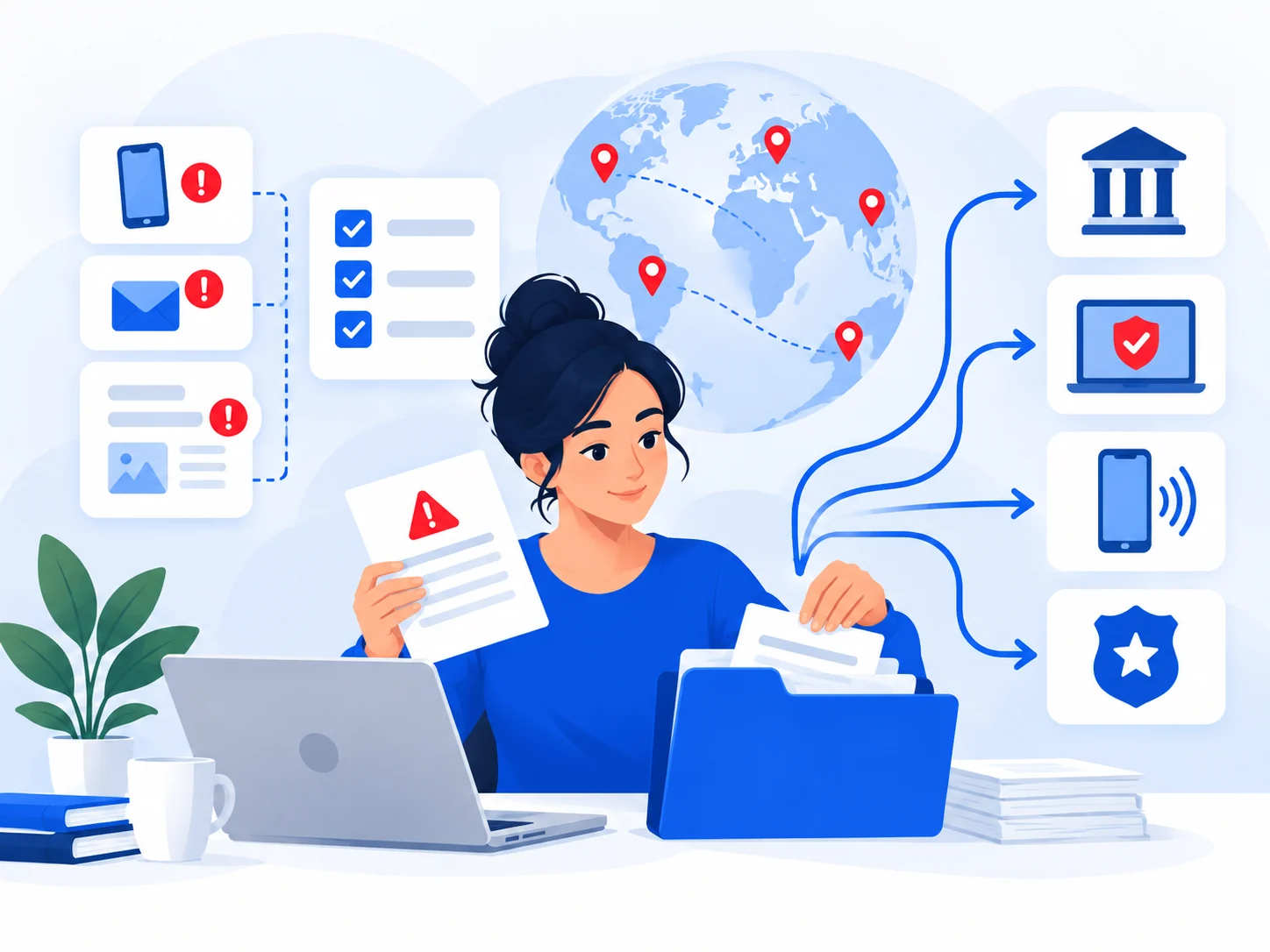
There is no single reporting destination for every scam worldwide. The most useful first report often goes to the organization that can still stop a transaction, secure an account, remove fraudulent content or preserve records.
Report to the organization that can act first
Depending on what happened, that may be your bank or card issuer, a payment or transfer provider, a cryptocurrency exchange, an online marketplace, a social platform, an email provider, a telecom provider or the organization being impersonated.
If money is still moving or an account is exposed, do not delay those protective actions while trying to decide which law-enforcement form is perfect.
Then use the correct jurisdiction
Consumer-protection agencies, cybercrime units, police reporting systems, financial regulators and dispute schemes differ by country. Use the official channel for your situation and jurisdiction rather than assuming another country's process applies to you.
ScamMark keeps jurisdiction-specific instructions separate when they are published, researched and current.
For a country-aware starting point and the distinction between the FTC/ICPEN, FBI IC3, local police and consumer reporting, see reporting an international scam. If you are looking for published fraud reports rather than submitting a complaint, use the country scam trends reference.
How to report a cross-border or international scam
Find official channels for international fraud, learn when to use econsumer.gov, IC3 or your national reporting agency, and act promptly to protect your accounts.
Read guide →GuideWhere should I report a scam?
A global reporting sequence that starts with the organization able to stop harm, then moves to the appropriate platform, regulator, police or national cybercrime channel.
Read guide →