
“Available” is not the same as verified
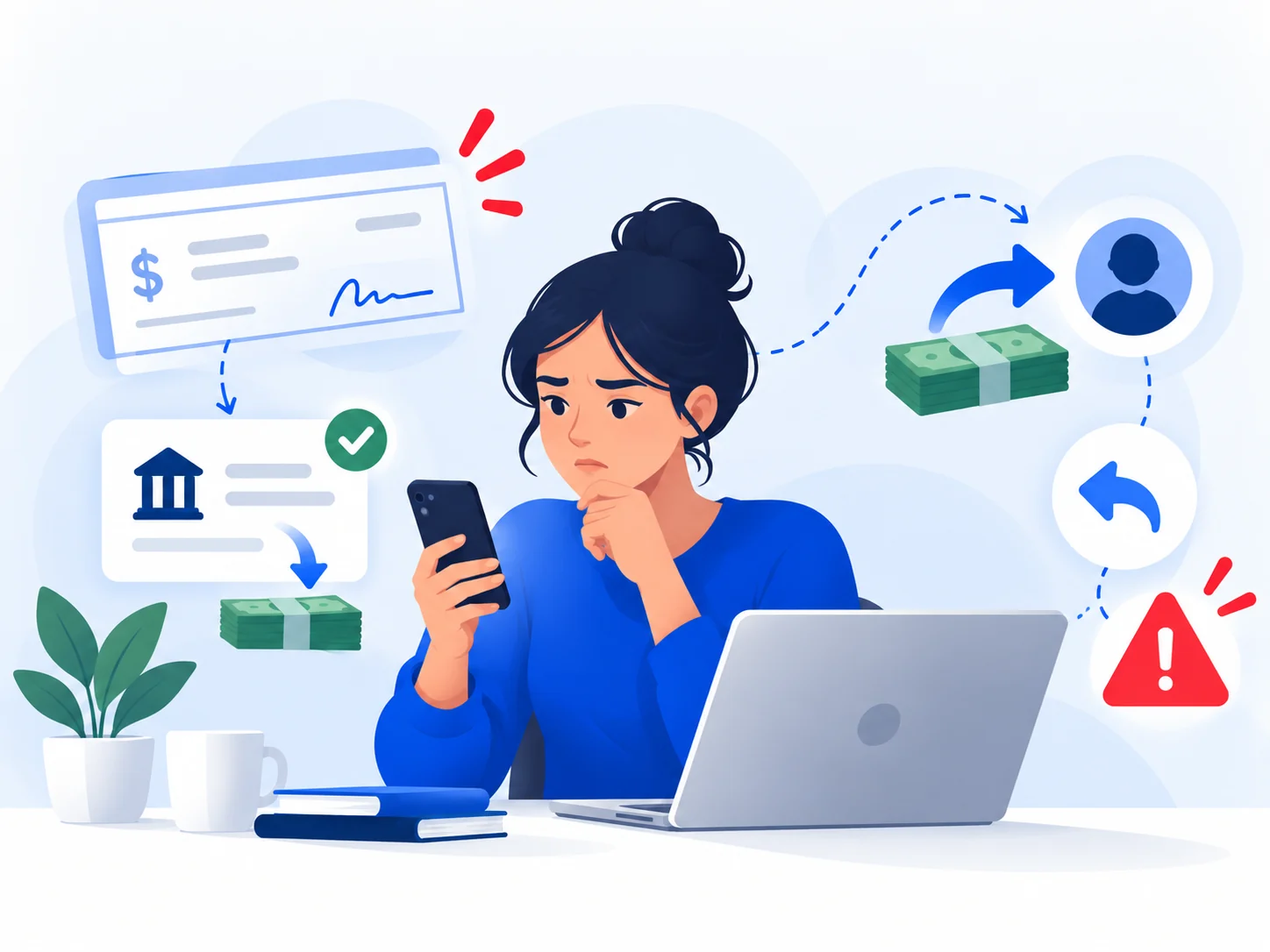
A fake or fraudulent check can look authentic, and banking systems may make funds available before the check is finally determined to be bad. The scammer exploits that delay.
The victim sees money in the account and is told to send some of it somewhere else. Later, the original deposit is reversed and the victim is responsible for the money that was sent onward.
Common stories
- a new employer sends money for equipment and tells you to pay a supplier;
- a buyer overpays for an item and asks for the difference back;
- a mystery-shopping job asks you to test gift cards or money transfers;
- a prize includes a check but requires you to pay taxes or fees;
- a personal-assistant job asks you to buy gift cards for the “boss.”
The rule that cuts through the story
Do not act as a payment intermediary for someone you do not independently know and trust. A legitimate payer should resolve its own overpayment or supplier obligation through normal financial channels.
If you are uncertain about a check, speak to your bank and explain the full situation rather than asking only whether the funds appear available.
Sources and references
These sources support the factual guidance and analysis on this page. For reporting, legal, financial or provider-specific procedures, follow the linked organization’s current instructions.
- How To Spot, Avoid, and Report Fake Check ScamsU.S. Federal Trade Commission