
The sales story changes; the pressure pattern does not
Investment scams can involve stocks, forex, real estate, commodities, private placements or supposedly exclusive programs. Common themes are unusually high returns, low risk, secret or proprietary methods, limited-time access and testimonials designed to create social proof.
Fake account growth
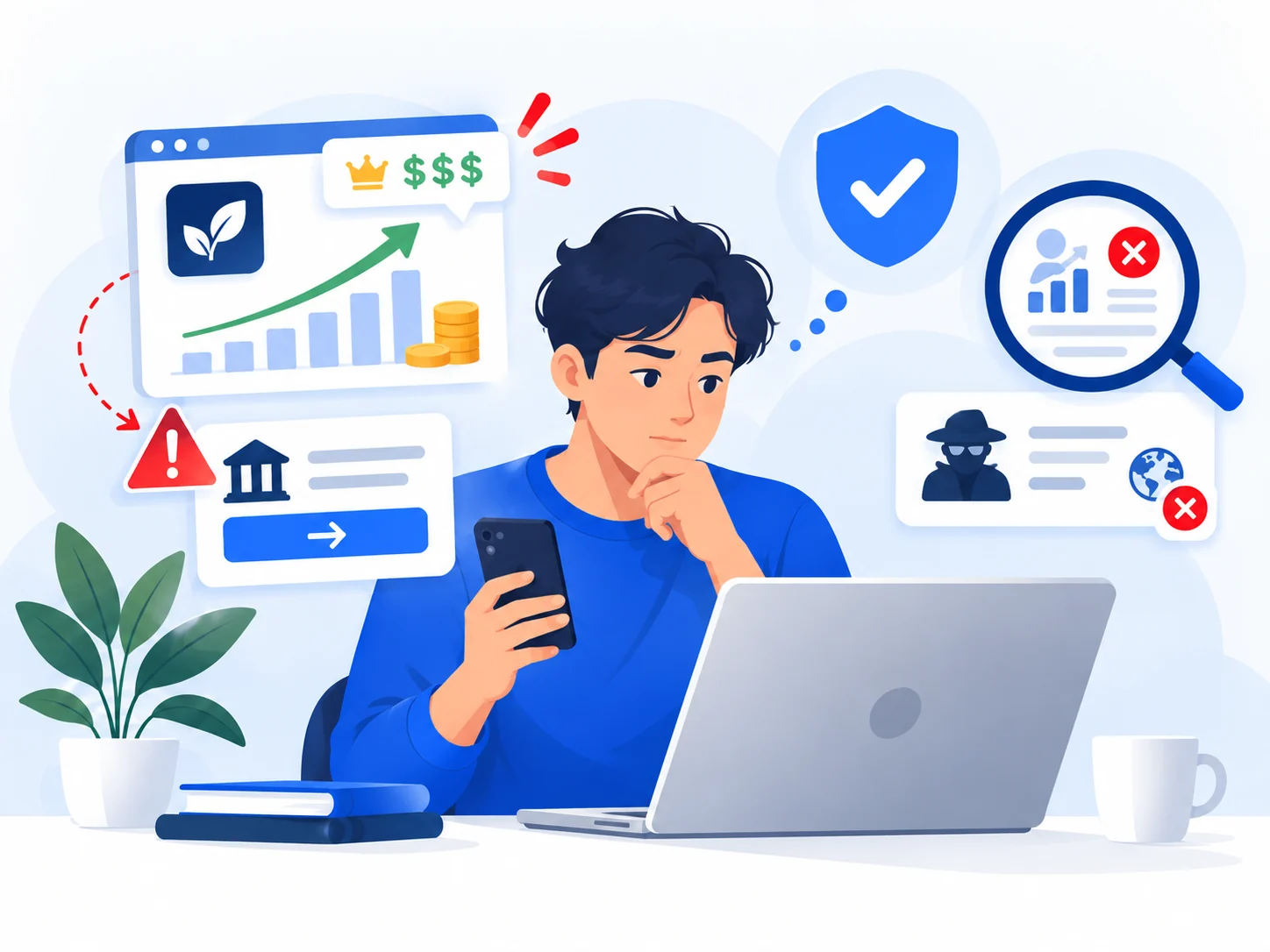
A scam platform may display convincing charts and profits that exist only on the screen. Small early withdrawals can be allowed to build confidence. When the victim tries to withdraw more, new taxes, verification deposits or release fees appear.
Verify before funding
Check whether the person and firm are licensed or registered in the jurisdiction relevant to the product and the person offering it. Use the regulator’s own database or website, not a certificate, screenshot or link supplied by the promoter.
A company name appearing in a registry does not automatically mean the specific investment, person or website is authorized. Clone firms can copy the identity of a genuine regulated business, so compare contact details against the regulator’s record.
A request for more money is not recovery
If a withdrawal is blocked and the platform says another deposit will unlock it, stop and verify independently before sending anything further.
Verify funding claims and investment group chats
Before investing in a startup or private opportunity, independently check the exact company, promoter, regulatory status and claimed financing using the business-opportunity due-diligence worksheet. A company registration or U.S. SEC Form D filing is not an SEC endorsement or proof of investment-professional registration; see Investor.gov’s warning on false registration claims.
The SEC warned in September 2026 of alleged investment confidence schemes that recruited participants through group chats, impersonated experts and used purported trading platforms. These were allegations in SEC complaints at the time of the announcement, not a finding about every investment group. Validate the particular adviser and platform independently; never assume an apparent expert, group testimonial, regulatory screenshot or displayed profit proves a genuine investment.
If a founder repeatedly asks for new contributions while earlier agreements remain unsettled, the repeated startup timeline helps document exposure. A business setback or unpaid invoice can still be a contractual dispute rather than fraud.
Pay a fee to unlock alleged investment profits?
An account balance, emailed tax demand or claim that a withdrawal is “approved” does not prove the funds exist. Investor.gov identifies release fees as a form of advance-fee fraud. Before any additional payment, see how to verify funding and release-fee claims, then independently contact the purported institution. An upfront demand can be suspicious without automatically proving every disputed commercial fee is unlawful.
Sources and references
These sources support the factual guidance and analysis on this page. For reporting, legal, financial or provider-specific procedures, follow the linked organization’s current instructions.
- Investment ScamsU.S. Federal Trade Commission
- What are the signs of a scam?U.S. Federal Trade Commission
- Investment scamsMoneysmart / Australian Securities and Investments Commission
- Protect yourself from scamsUK Financial Conduct Authority
- Global Financial Fraud Threat Assessment 2026INTERPOL
- False Claims of SEC RegistrationU.S. Securities and Exchange Commission / Investor.gov
- SEC Charges Investment Confidence Schemes Through WhatsApp (allegations)U.S. Securities and Exchange Commission