
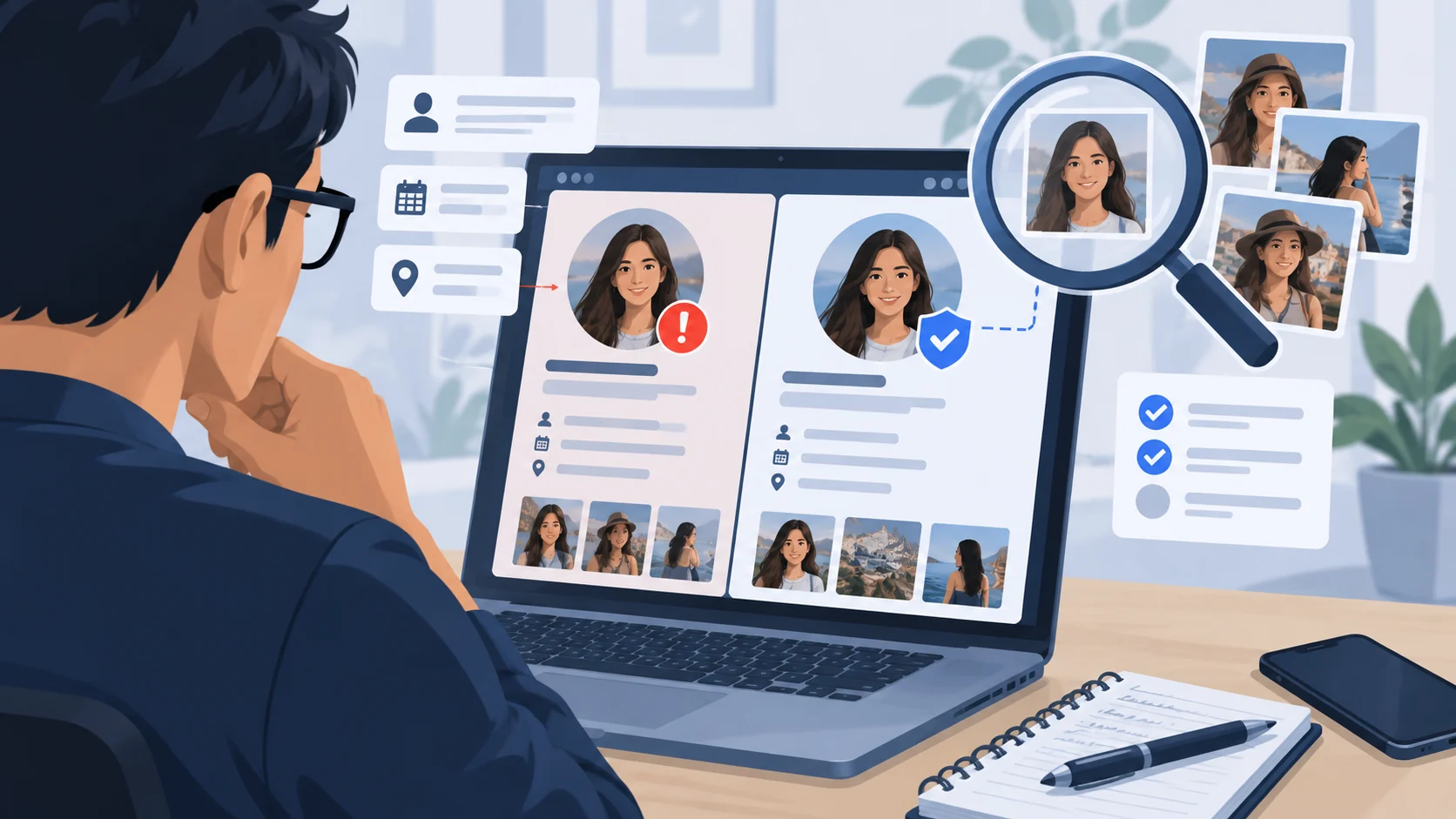
A storefront can have attractive product photography, familiar logos, a working checkout and HTTPS encryption without proving who operates it. The goal is not to give the store a numerical trust score. It is to answer specific questions before you send money or personal information.
Run the free website and domain check to inspect technical facts, then use the interactive pre-purchase verification checklist to record what you have and have not confirmed independently. Your checklist choices remain in your browser during the session; they are your assessments, not facts verified by ScamMark.
Step 1: Confirm the exact web address
Read the hostname in the browser address bar, not the text of an advertisement or the store's logo. A name that resembles a well-known brand can be registered by somebody else. Watch for added words, unusual spelling, extra hyphens, unrelated domains and brand names appearing only in a subdomain or URL path.
For a supposed branch of a familiar retailer, start from the retailer's independently established website and follow its own store locator or authorized-seller information. If the suspicious shop cannot be found through that route, do not assume it is an official outlet.
The ScamMark checker can retrieve a domain's reported registration date, redirects and declared page identity where accessible. Domain age is only context: an old domain can change operators, and a new shop need not be dishonest. HTTPS proves the connection is encrypted, not the business behind it.
Step 2: Identify the business behind the checkout
Look for the exact legal trading name, company or registration number (where relevant), address, contact method and seller identity shown at checkout. Ask whether these details agree across the store, its terms and its payment recipient.
Where a business claims to be registered, search the official business registry for the claimed country or region yourself. The registry should confirm the entity's existence or recorded status if that information is public; it may not establish that this particular site is operated by that entity. A copied registration number or address is possible. Check whether the actual business connects itself to this store through an independent channel.
A genuine small business may operate from home or with limited public registration details; missing information should prompt proportionate additional checks, not an automatic accusation.
Step 3: Evaluate reviews that the shop does not control
Search the exact domain and the business name separately, together with terms such as complaint, returns and review. Consult multiple independent sources. Consider whether review histories span time and describe specific purchases, shipping or refunds, rather than just praise. Look for repeated wording or bursts of recent reviews, but remember that neither glowing reviews nor complaints prove a particular allegation.
Screenshots of five-star reviews shown on the seller's own site are the seller's claims. Even third-party ratings can be manipulated. The FTC's review guidance explains why ratings should never be the final test.
Step 4: Test the offer, delivery and refund promises
Compare the quoted price and exact model with established sellers. A genuine clearance sale can be deeply discounted, so the discount alone is weak evidence. Greater concern arises when dramatic discounts appear with a countdown timer, a brand-mimicking domain and a payment method you cannot readily dispute.
Before paying, locate clear answers to:
- Who dispatches the order, and from which country?
- Are shipping costs, import duties and taxes disclosed before checkout?
- Is delivery time described realistically, with any exclusions?
- How many days do you have to request a return or refund, and what conditions apply?
- Who pays return shipping, and where must goods be sent?
- Is there a usable contact route if the parcel never arrives?
Policies that contradict one another, mention a different business, or promise an impossible delivery window deserve follow-up. A copied policy document is not proof of fulfillment capacity.
Step 5: Keep a meaningful payment dispute route
Prefer a payment method that gives you an enforceable or practical dispute process in your own jurisdiction. Card-network and provider protections vary by country, card type, merchant agreement and transaction circumstances. Read your card issuer's terms rather than assuming the same legal deadlines apply worldwide.
Be especially cautious if the seller demands gift cards, cryptocurrency, a wire transfer to an unrelated person, a payment-app transfer without buyer protection, or a last-minute change of recipient. These payment methods can be difficult to reverse. A familiar payment-provider logo is not evidence until you reach the actual provider checkout on a domain you recognize.
Never enter a password, one-time code, recovery phrase or full payment-card details into ScamMark. The checker needs only a public website address.
Step 6: Decide what remains unresolved before buying
A useful pre-purchase decision is a stop condition, not a score. If you cannot independently connect the website to the claimed seller, cannot understand the refund path, or are required to pay outside normal protections, postpone the purchase. A screenshot or chat assurance is not a substitute for evidence.
Use the pre-purchase checklist to identify which checks still need attention. If all your answers are positive, the result is still your own recorded assessment, not a ScamMark endorsement or evidence that delivery will occur.
Standalone store versus marketplace listing
A standalone retailer controls its own checkout and policies; you must verify the business and consider your bank or payment provider's dispute route. On an established marketplace, the platform may provide an additional reporting or buyer-protection process, but only if the specific purchase qualifies and you follow the platform's rules. Moving to direct payment outside that platform can remove those protections. See how marketplace buyer and seller scams differ and how to verify a seller profile.
If you have already paid or shared details
Save the order confirmation, item description, URL, seller messages, payment transaction, promised delivery date and any return-policy screenshots. Contact your bank, card issuer or payment provider promptly to ask about stopping or disputing the payment. Change any exposed password through the real service's independently located website and enable multi-factor authentication where available.
Use ScamMark's sent-money response steps and evidence-preservation guide. The exact dispute deadlines, consumer protections and reporting channels depend on location and payment method; no recovery is guaranteed.
Sources and references
These sources support the factual guidance and analysis on this page. For reporting, legal, financial or provider-specific procedures, follow the linked organization’s current instructions.
- Online ShoppingU.S. Federal Trade Commission
- How to evaluate online reviewsU.S. Federal Trade Commission
- Shopping and paying safely onlineUK National Cyber Security Centre
- How to avoid an online shopping scam this holiday seasonU.S. Federal Trade Commission
- Buying from an online marketplaceU.S. Federal Trade Commission