
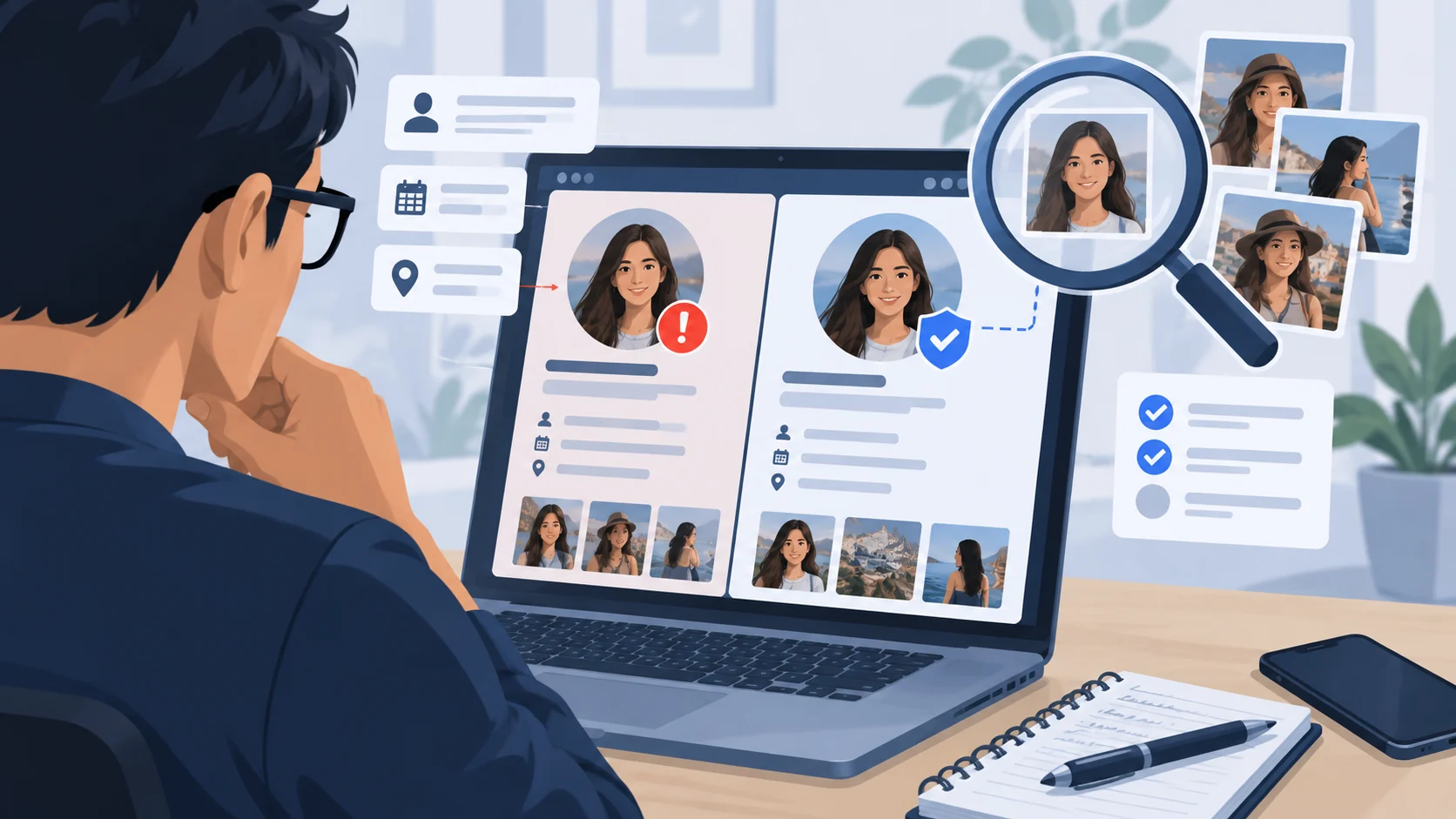
If the seller uses an unfamiliar website or store domain, run the ScamMark Website & Domain Risk Checker as one part of the verification process. Domain and technical signals can reveal useful inconsistencies, but they do not replace checking the seller itself.
Check whether the seller has a consistent history
Look beyond follower counts and polished photos. Check when the profile or page became active, whether older posts are consistent with the current business, whether contact details match across channels, and whether the same images appear under unrelated names.
Reviews can help, but do not treat them as proof. Look for a believable spread over time, specific details, and independent sources rather than a sudden cluster of generic praise.
Keep the transaction where protections exist
A common warning sign is pressure to move from a marketplace or booking platform into private chat and then pay by bank transfer, e-wallet, cryptocurrency or another method that removes platform protections.
Before paying, confirm:
- the exact item or service and total price;
- delivery, pickup or fulfillment terms in writing;
- refund/cancellation terms;
- the recipient name and payment destination;
- whether the payment method gives you a practical dispute path.
Verify high-value sellers more aggressively
For expensive purchases, independently verify business registration or licensing where relevant, ask for a live view of the item or premises when practical, and compare the seller’s claimed address and phone number with independent records.
Do not send more money simply because the seller says a new fee, insurance charge, customs cost or release payment suddenly appeared after the original deal.
If the seller operates a standalone shop rather than a listing on a known marketplace, use the online-store verification guide to check the retailer, delivery terms and payment route. These are different from a marketplace's platform-specific protections.
Sources and references
These sources support the factual guidance and analysis on this page. For reporting, legal, financial or provider-specific procedures, follow the linked organization’s current instructions.
- Online ShoppingU.S. Federal Trade Commission
- What are the signs of a scam?U.S. Federal Trade Commission
- E-Commerce — tips and advice to avoid becoming a fraud victimEuropol