
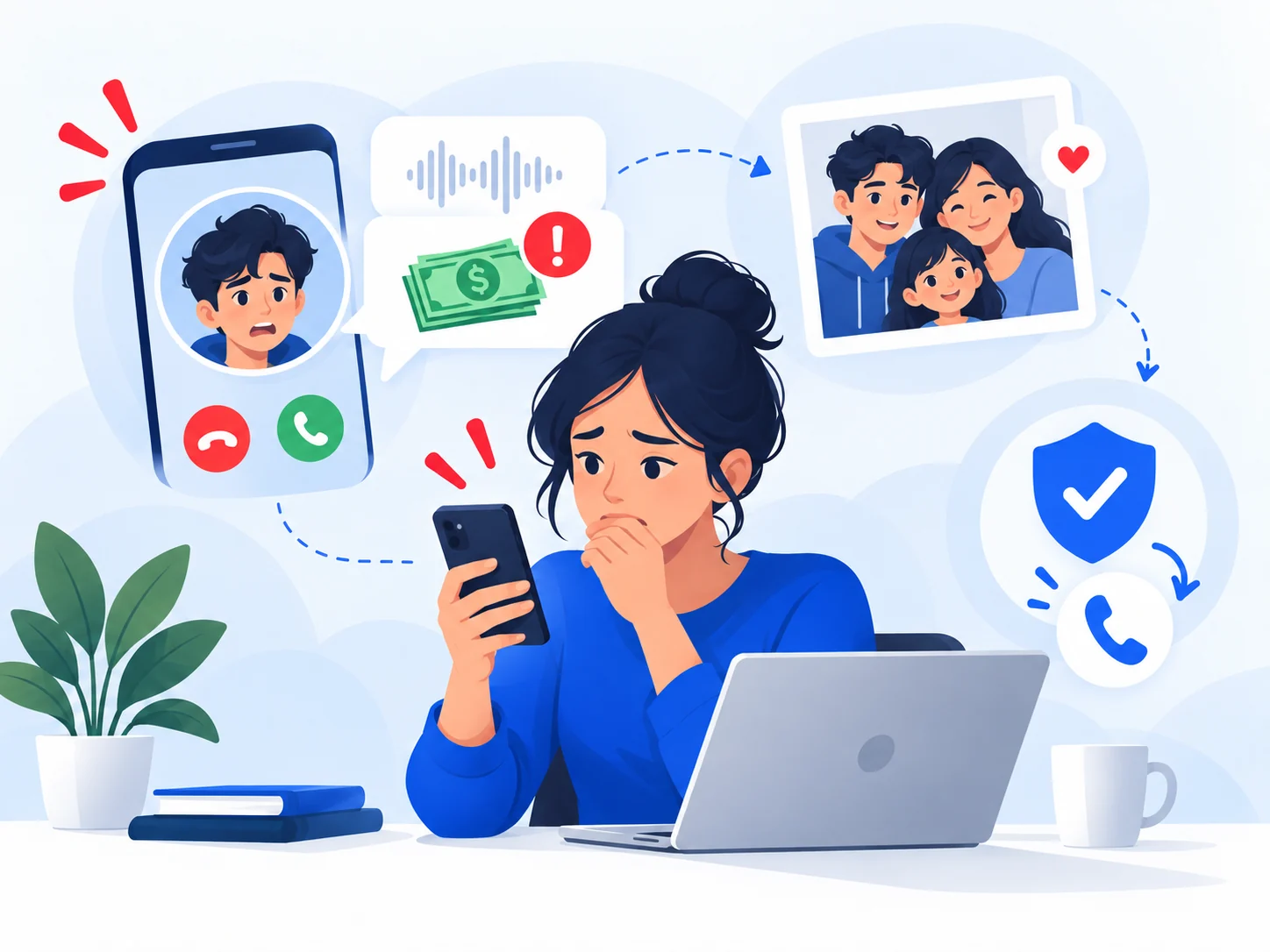
How the scam builds credibility
The contact may know your name, bank, recent activity or partial account information. Caller ID may even display the bank’s name. The scammer then creates a crisis: an unauthorized transaction, compromised account, suspicious loan or internal employee fraud.
The crucial step is usually an instruction to move money, approve a transfer, reveal a code, install remote-access software or follow a private procedure that bypasses normal banking safeguards.
Why “safe account” language is dangerous
Scammers may claim funds must be moved temporarily to a secure account, government wallet or new account while an investigation happens. The recipient is controlled by the scammer.
Verification rule
End the conversation and contact the bank yourself using a trusted channel. Do not assume the caller ID, text thread or number in the message is genuine.
If money already moved, contact the bank’s fraud team immediately and preserve the transfer details.
Sources and references
These sources support the factual guidance and analysis on this page. For reporting, legal, financial or provider-specific procedures, follow the linked organization’s current instructions.
- FTC Impersonators and impersonation guidanceU.S. Federal Trade Commission
- What are the signs of a scam?U.S. Federal Trade Commission
- L’hameçonnage au faux numéro d’opposition bancaireCybermalveillance.gouv.fr (France)