
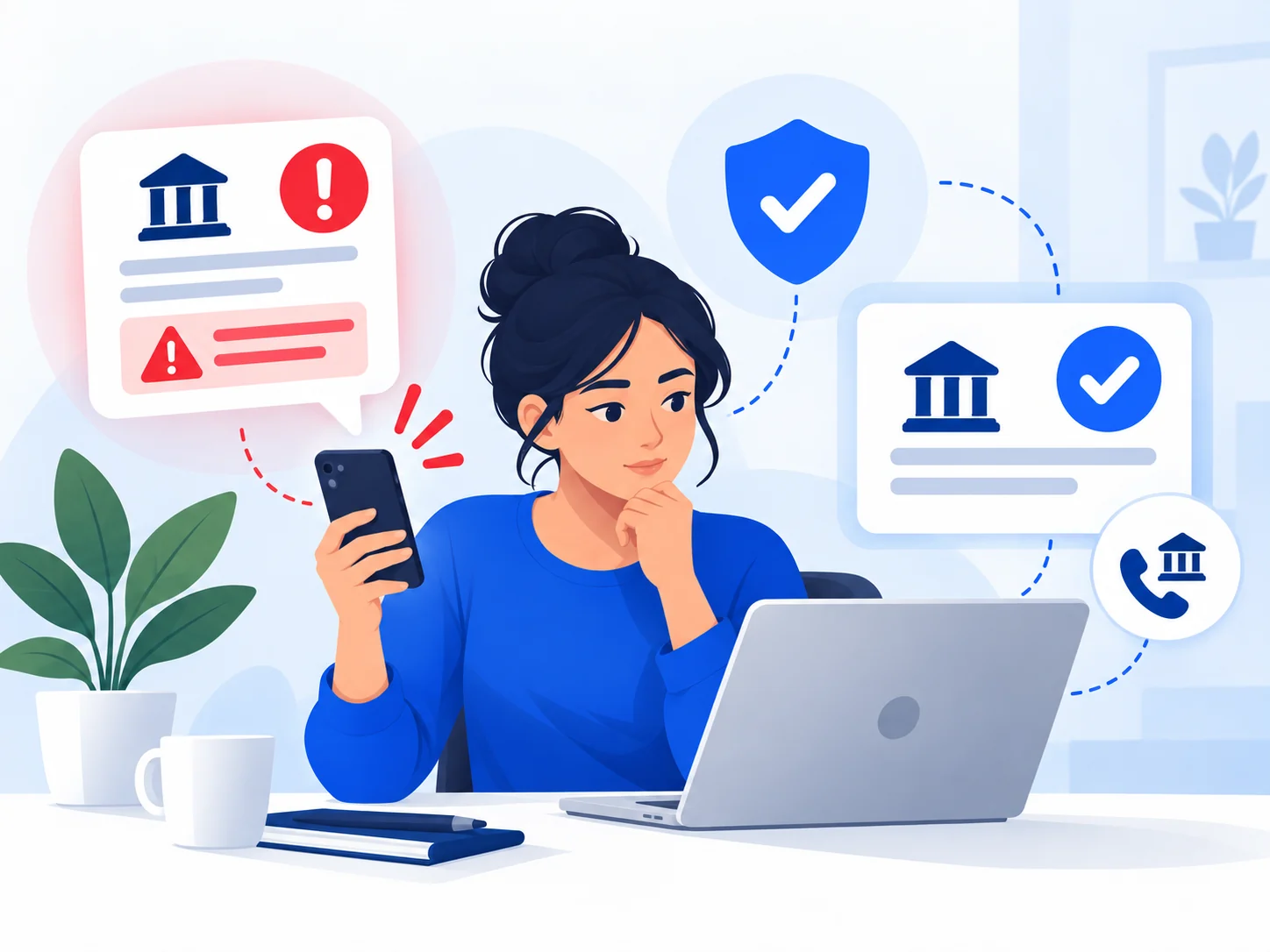
The safest verification path
A real bank may contact you about suspicious activity, but a scammer can imitate the bank’s name, phone number, branding and urgency. The verification step must therefore be independent of the contact.
- Close the message or end the call.
- Open the bank app you already use, or type the bank’s known website yourself.
- Review account alerts and recent transactions.
- If necessary, call a trusted number from the back of your card, a statement, or the bank’s official website.
Major red flags
Be especially cautious if someone claiming to be from a bank asks you to:
- move money to another account, wallet or “safe” account;
- share a one-time code or authentication approval;
- install remote-access software;
- scan a QR code to secure funds;
- keep the call secret from bank staff or family;
- ignore what your banking app says because the caller has a special internal process.
A message that says your money is in danger can be designed specifically to make you bypass normal controls.
If there really is an unauthorized transaction
Use the bank’s official fraud channel immediately. Record the time, reference number and actions the bank tells you it is taking. Dispute, reimbursement and escalation rules vary by jurisdiction, so use the bank’s published process and the relevant financial regulator or dispute scheme for your country when escalation is necessary.
Sources and references
These sources support the factual guidance and analysis on this page. For reporting, legal, financial or provider-specific procedures, follow the linked organization’s current instructions.
- FTC Impersonators and impersonation guidanceU.S. Federal Trade Commission
- How To Avoid a ScamU.S. Federal Trade Commission
- L’hameçonnage au faux numéro d’opposition bancaireCybermalveillance.gouv.fr (France)