
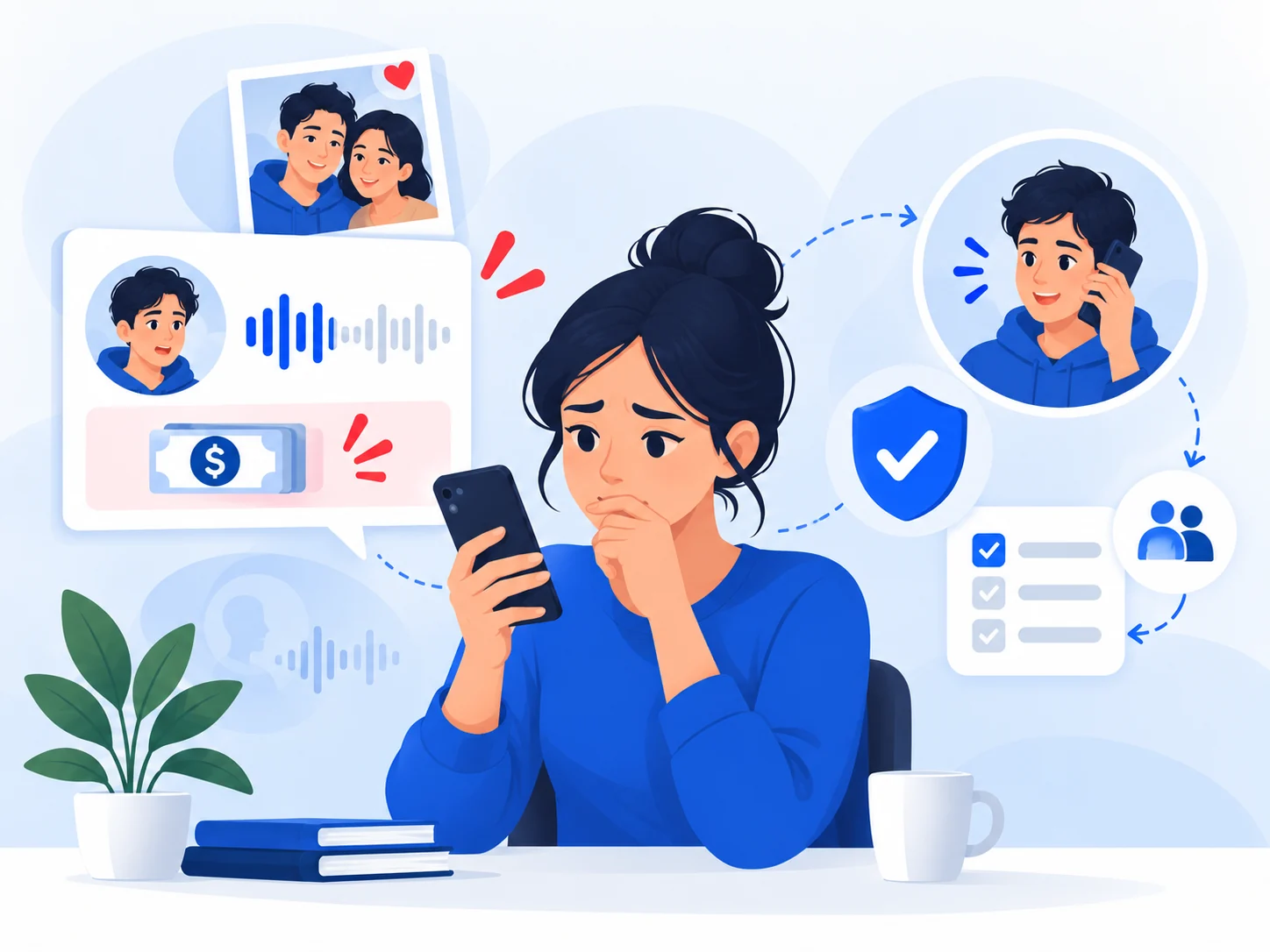
The scam is designed to defeat deliberation
The caller or message claims that someone you care about has been arrested, injured, stranded, kidnapped, robbed or otherwise placed in immediate danger. A second person may appear as a police officer, lawyer, doctor or other authority figure.
The story often includes two deliberate controls: urgency and secrecy. You are told to act before checking with anyone else.
A familiar voice is no longer strong proof
Voice cloning and other synthetic-media tools can make an impersonation sound convincing. Scammers may also use short responses, poor connections or emotional distress to explain why the voice is not perfect.
Treat the voice as part of the story, not as authentication.
Verify through your own family network
Hang up and call the person using a number you already have. If you cannot reach them, contact another relative or trusted person who can verify where they are.
A family code word can add friction, but it should not be the only defense because secrets can leak. The stronger habit is that unexpected emergency money requests always get a second-channel check.
Payment method can reveal the scam
Requests for gift cards, cryptocurrency, wire transfers, cash pickup or other hard-to-reverse payments are especially concerning. A legitimate emergency does not become less legitimate because you take a few minutes to verify it.
Sources and references
These sources support the factual guidance and analysis on this page. For reporting, legal, financial or provider-specific procedures, follow the linked organization’s current instructions.
- Scammers Use Fake Emergencies To Steal Your MoneyU.S. Federal Trade Commission
- Social engineering — when trust is exploitedEuropol