
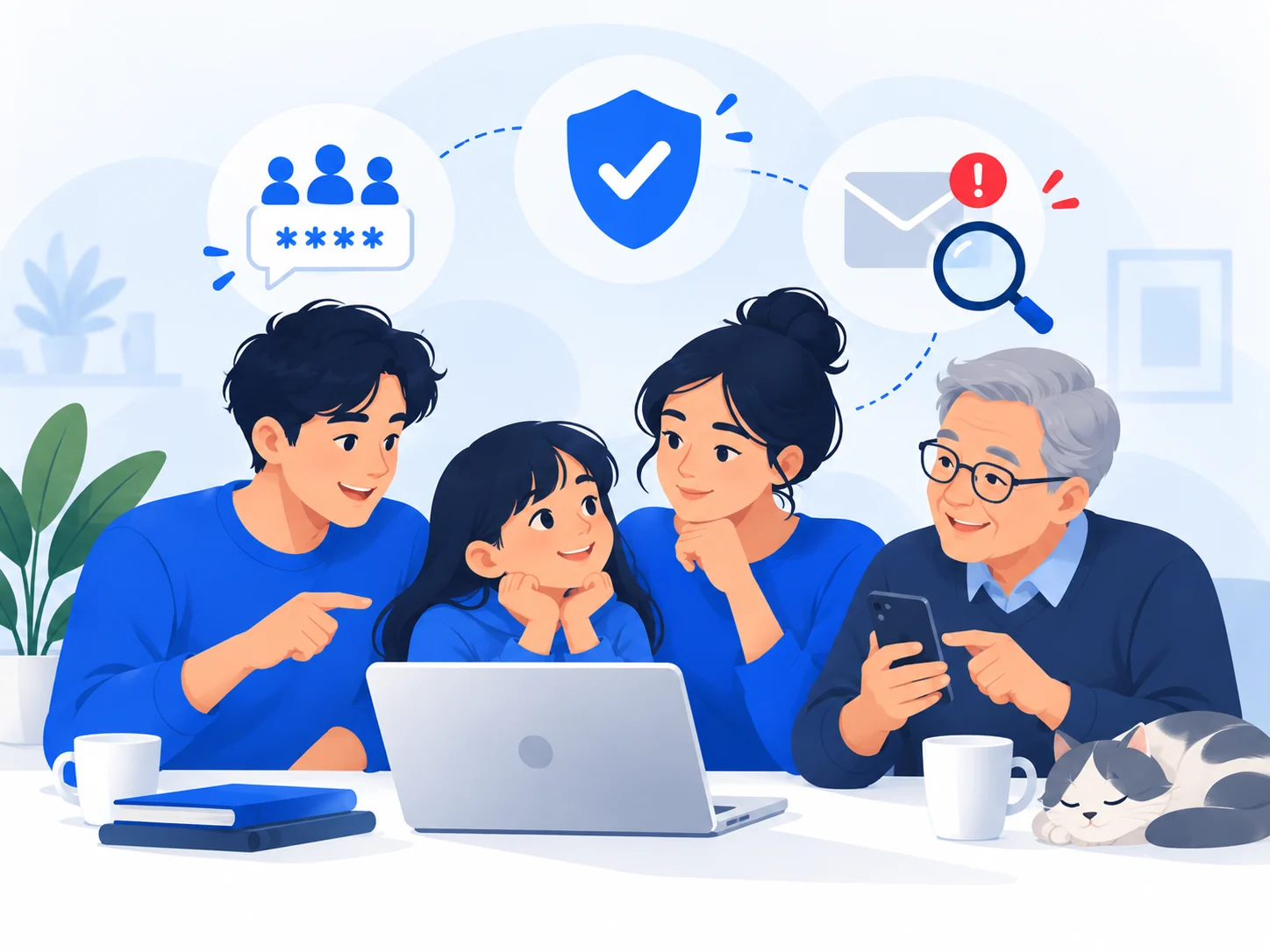
Create a pause rule before a crisis
A family rule works best when it is agreed in advance, not introduced while someone is already under pressure. One example: no one sends money, shares a verification code, installs remote-access software or moves funds because of an unexpected contact without checking with one trusted person first.
Make verification easy
Keep known-good contact details for important banks, insurers, utilities and family members. Encourage everyone to call back using those saved numbers rather than numbers provided by an unexpected caller or message.
Use a family verification phrase
For urgent requests supposedly coming from a relative, a private phrase or question can help — but it should supplement, not replace, calling the person back through a known number. Voice cloning and compromised accounts make familiar voices and profiles less reliable than they used to be.
Remove embarrassment from the process
Scammers are trained to manipulate emotion and urgency. Make “I want a second opinion” a normal safety behavior. If someone has already engaged with a scammer, focus first on stopping further loss rather than assigning blame.
Secure the basics
Help family members use unique passwords, multifactor authentication, device updates and built-in spam filtering. Email and financial accounts deserve special attention because compromise there can cascade into other services.
Sources and references
These sources support the factual guidance and analysis on this page. For reporting, legal, financial or provider-specific procedures, follow the linked organization’s current instructions.
- How To Avoid a ScamU.S. Federal Trade Commission
- What are the signs of a scam?U.S. Federal Trade Commission