
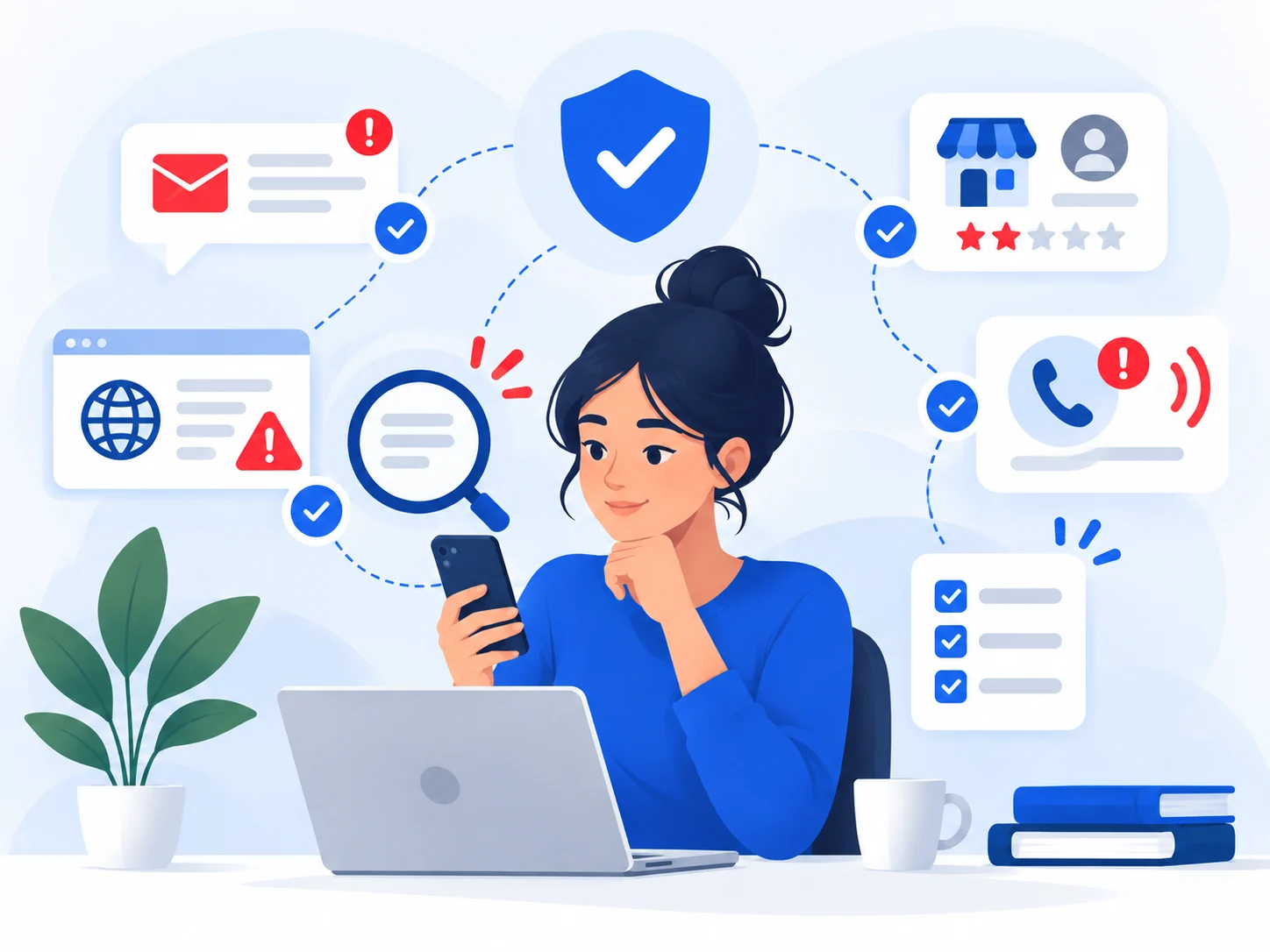
Ask these six questions
- Was the contact unexpected? Unexpected does not mean fraudulent, but it raises the verification threshold.
- Am I being rushed or frightened? Pressure is used to reduce the chance that you will check.
- Am I being told exactly how to pay? Gift cards, crypto, wire transfers, payment apps and bank transfers can be difficult to recover once sent.
- Am I being asked for a password, code, seed phrase or remote access? Stop and verify independently.
- Does the person resist a callback or second opinion? Legitimate organizations should tolerate independent verification.
- Can I verify the claim without using anything they supplied? Use a known app, official website, trusted number or independent registry.
If two or more answers worry you
Do not continue just because one part of the story seems legitimate. End the call or conversation, preserve the message if needed, and verify independently.
If you already acted
Do not keep investigating at the expense of time-sensitive recovery. If money moved or credentials were exposed, switch immediately to the relevant recovery steps.
Sources and references
These sources support the factual guidance and analysis on this page. For reporting, legal, financial or provider-specific procedures, follow the linked organization’s current instructions.
- What are the signs of a scam?U.S. Federal Trade Commission
- How To Avoid a ScamU.S. Federal Trade Commission