
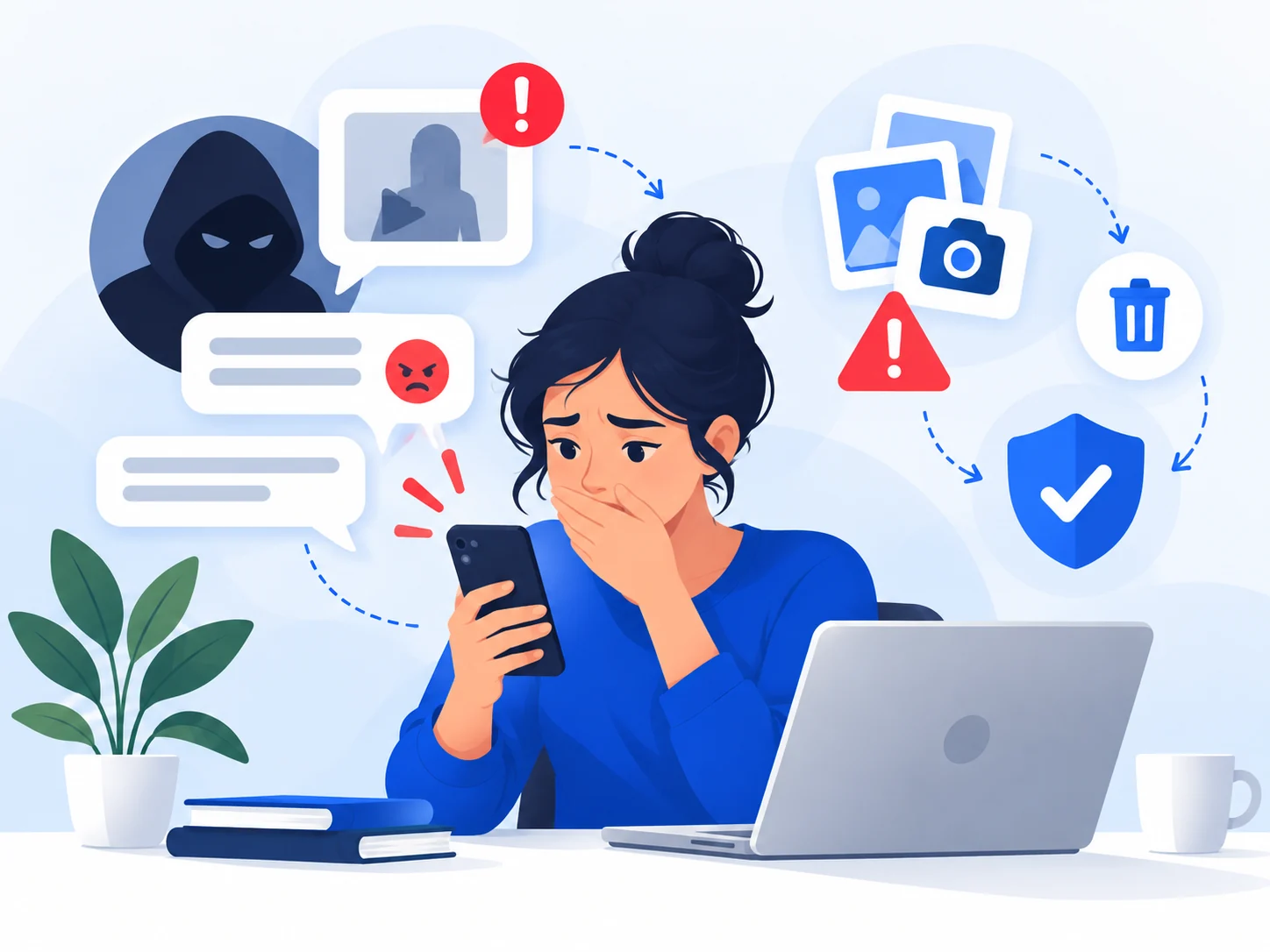
Sextortion can use real or fake material
In one form, a scammer builds a relationship or sexual conversation, persuades the target to share intimate material and then threatens to send it to family, friends, employers or followers.
Another form is largely automated: an email claims your webcam was hacked and demands cryptocurrency even though no compromising recording may exist. Increasingly, manipulated or AI-generated images can also be used to make a threat appear credible.
INTERPOL's 2026 global fraud assessment describes financially motivated sextortion as increasing across regions and becoming integrated with romance and investment fraud.
Why paying can increase the pressure
Payment proves that the threat produced a response. It does not give you control over copies of the material, and the scammer may simply demand more.
What to preserve
Keep usernames, profile URLs, phone numbers, wallet addresses, payment instructions, threats, timestamps and screenshots where doing so is safe and lawful. Avoid repeatedly forwarding intimate material; preserve what investigators or the platform may need without spreading it further.
Get help without shame
The coercion is the offender's action. If the threat involves a child or young person, use the relevant child-protection and law-enforcement channels urgently. Adults should also consider police or cybercrime reporting, platform reporting and trusted support depending on jurisdiction.
If you feel at immediate risk of self-harm or physical harm, contact local emergency or crisis support rather than handling the threat alone.
Sources and references
These sources support the factual guidance and analysis on this page. For reporting, legal, financial or provider-specific procedures, follow the linked organization’s current instructions.
- Global Financial Fraud Threat Assessment 2026INTERPOL
- Financial crime — don’t become a victim!INTERPOL
- Arrestation ... d’une campagne d’arnaque de « sextorsion »Cybermalveillance.gouv.fr (France)