
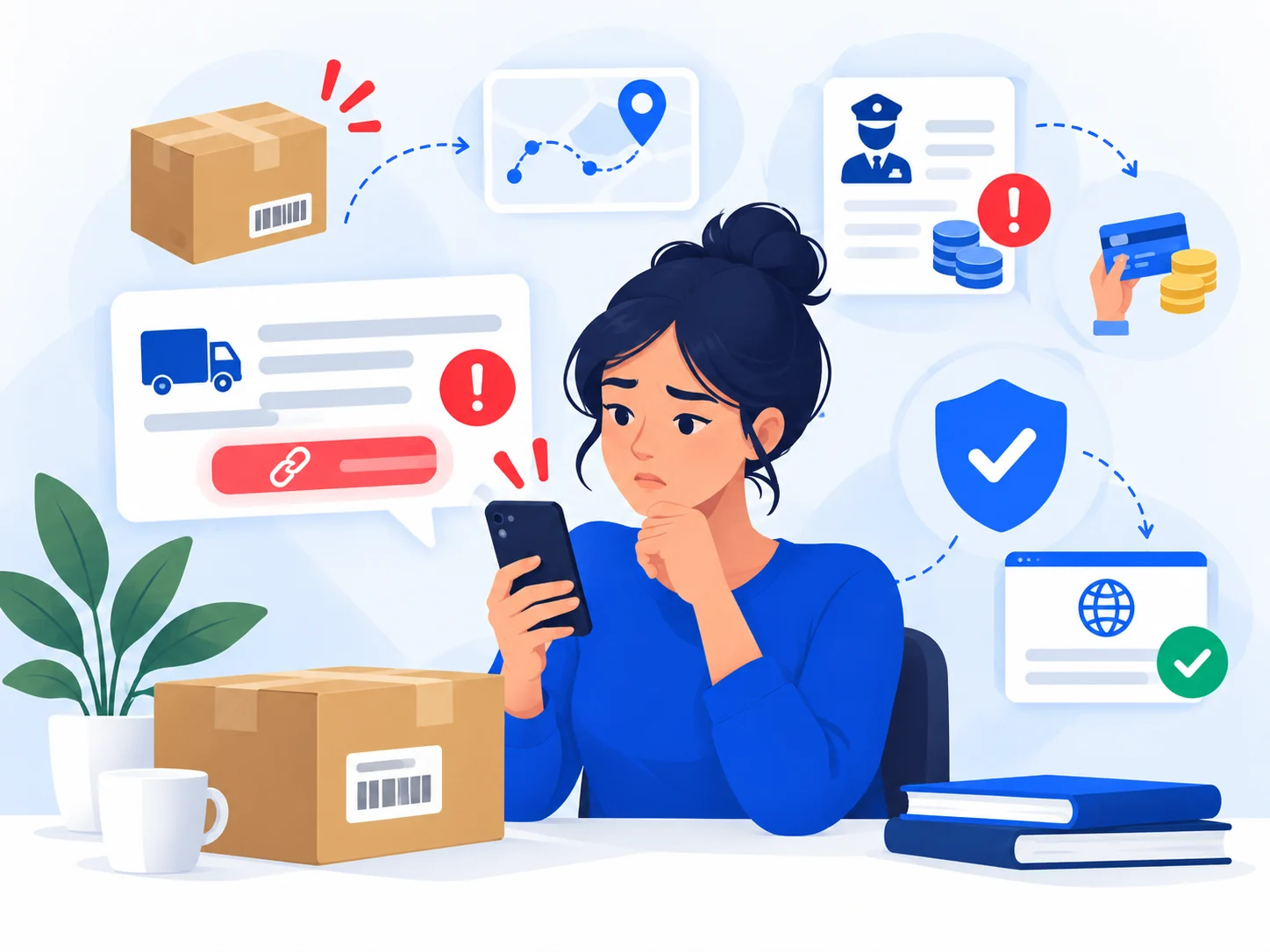
Why delivery is effective bait
Millions of people are waiting for parcels at any given time. A generic message about a missed delivery can therefore feel personally relevant without the scammer knowing whether you actually ordered anything.
France's Cybermalveillance.gouv.fr describes parcel-delivery phishing as one of the most heavily used phishing themes it observes.
The small fee is often not the real objective
The message may ask for a modest redelivery, customs or address-correction fee. The fake payment page can collect card details, credentials and personal information that are worth more than the fee itself.
Other campaigns use the delivery story to install malware, hijack an account or move the victim into a fake tech-support flow.
Verify through the order you already made
Start with the merchant or marketplace where you placed the order. Use the tracking number from the original order confirmation and enter it on the courier's official site or app.
Be cautious when the message contains a shortened or lookalike domain, asks for card details for a tiny fee, or creates an unusually short deadline.
Sources and references
These sources support the factual guidance and analysis on this page. For reporting, legal, financial or provider-specific procedures, follow the linked organization’s current instructions.
- L’hameçonnage à la livraison de colisCybermalveillance.gouv.fr (France)
- How To Avoid Imposter ScamsU.S. Federal Trade Commission
- Phishing scams — how to spot and report themUK National Cyber Security Centre